

CR-Grade neoprene, explained
Neoprene earned its reputation in the ocean. It is the material premium wetsuits are made of — a chloroprene rubber (the CR in CR-Grade) that resists water, insulates, and stretches without losing its shape. Coverking has been tailoring that same material to vehicle seats for 25 years. Here is what that means for your interior.
What CR-Grade means — and what it does not
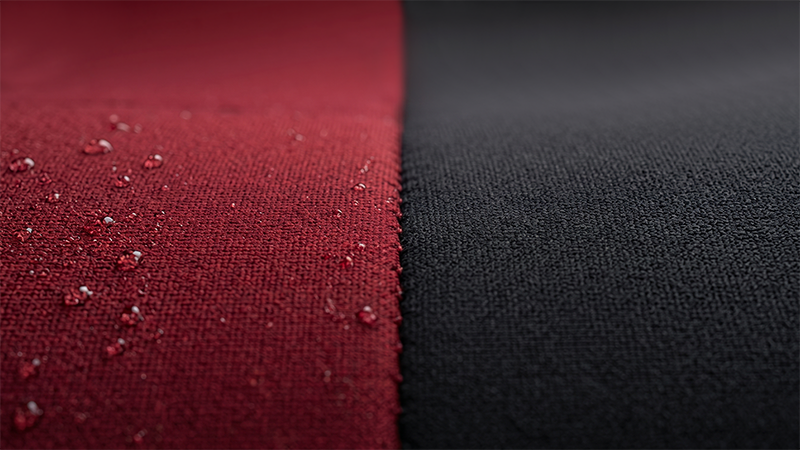
Much of what is sold online as a neoprene seat cover is printed polyester foam — a fabric embossed to look like neoprene, without the closed-cell rubber core that does the work. Genuine CR-grade neoprene is different: the chloroprene layer keeps spills, sweat, and moisture from ever reaching your upholstery. It is the difference between a material that repels water and one that eventually soaks it up.
Patterned to your seats, not a shape like them
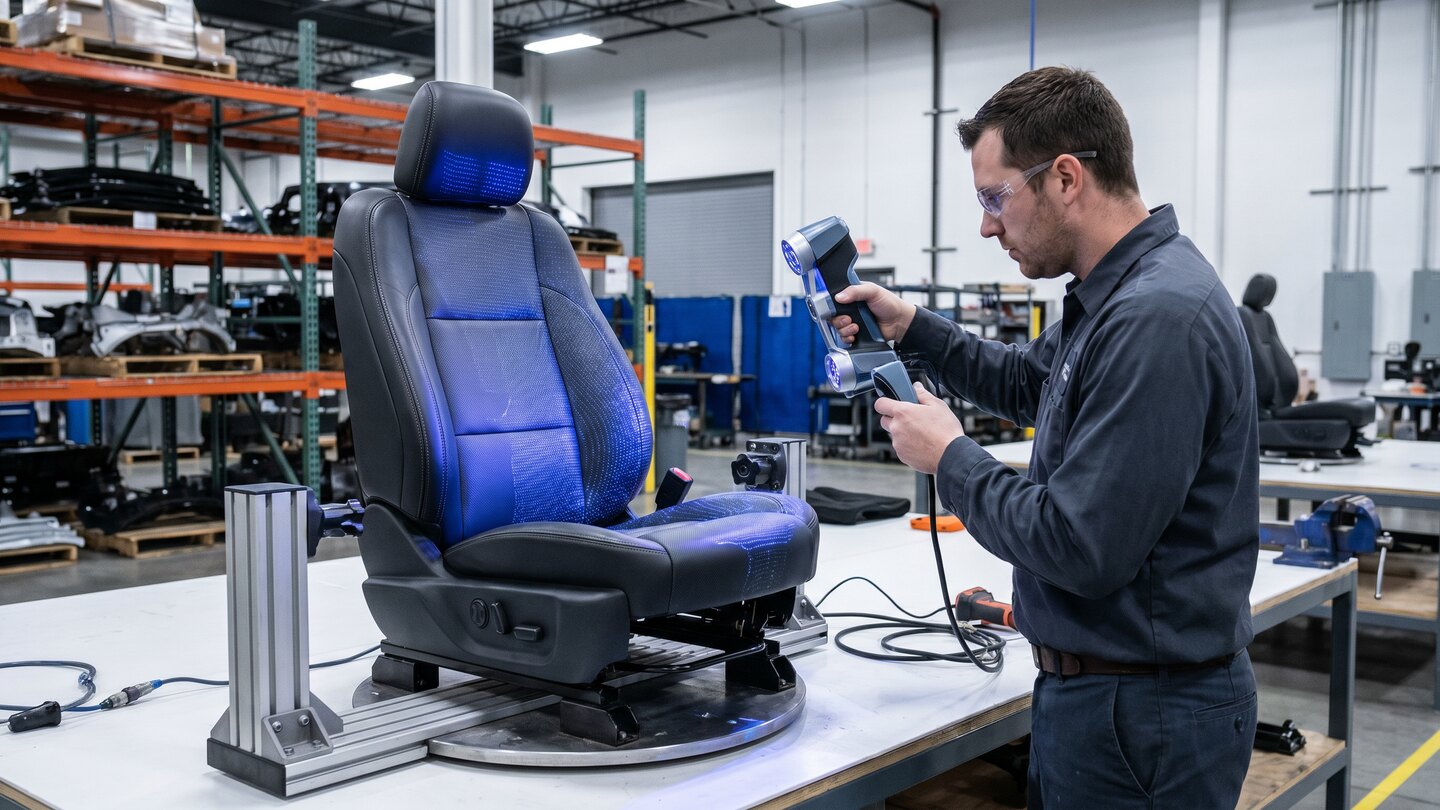
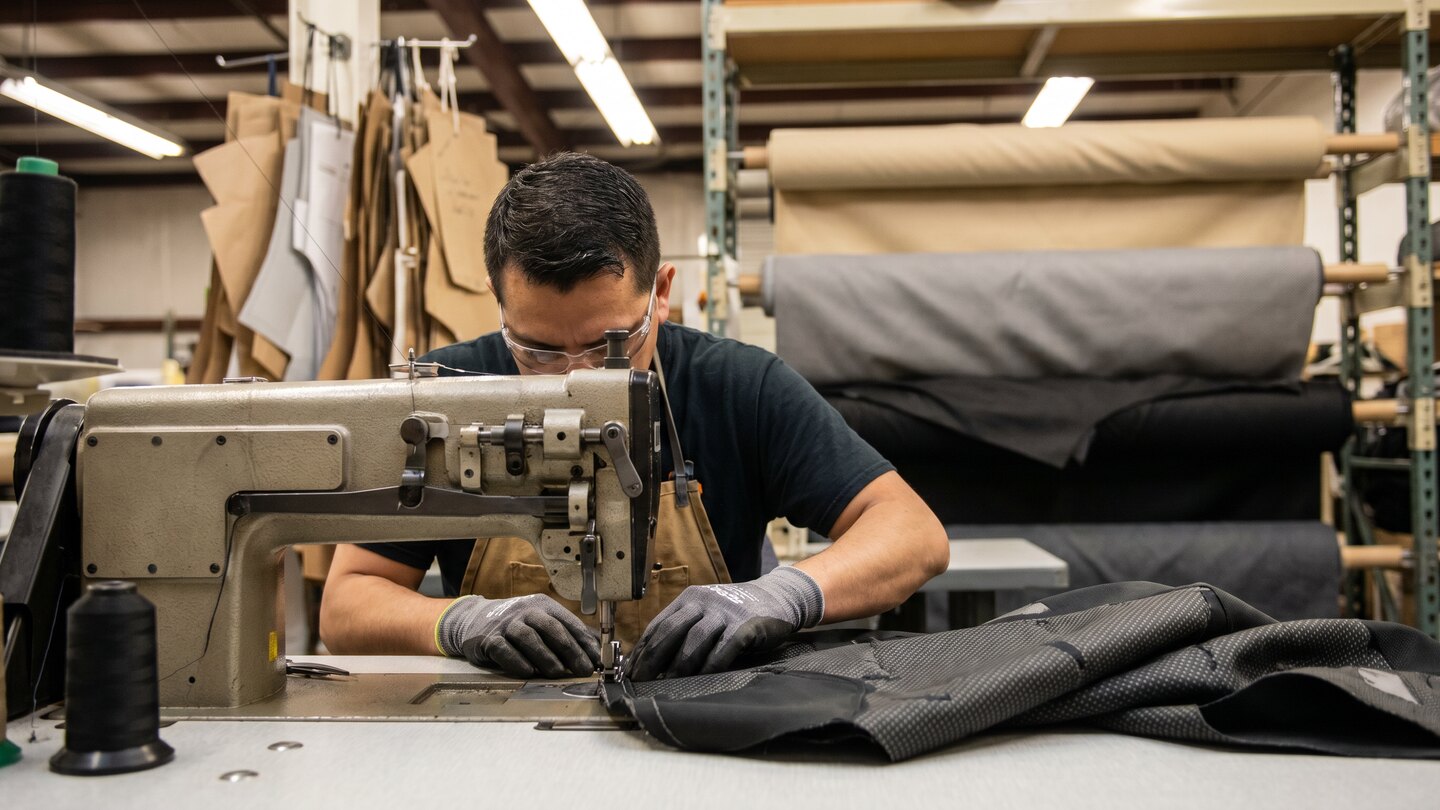
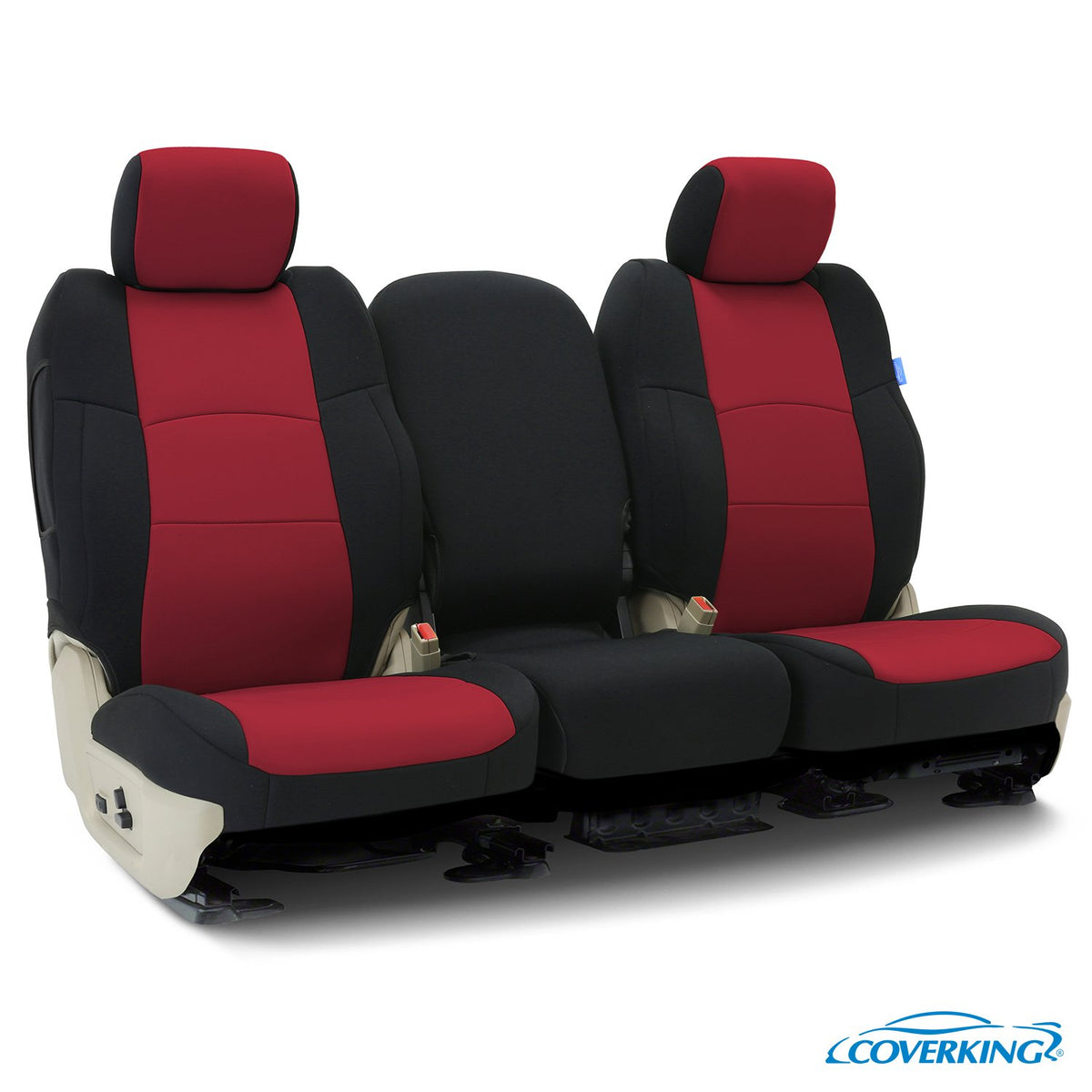
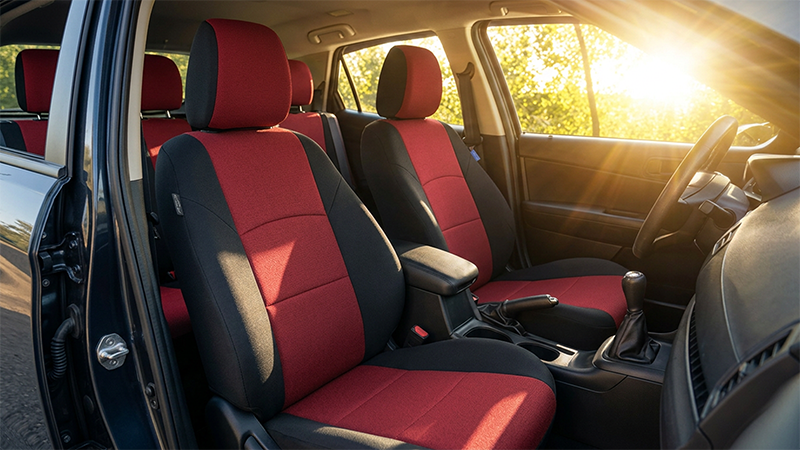
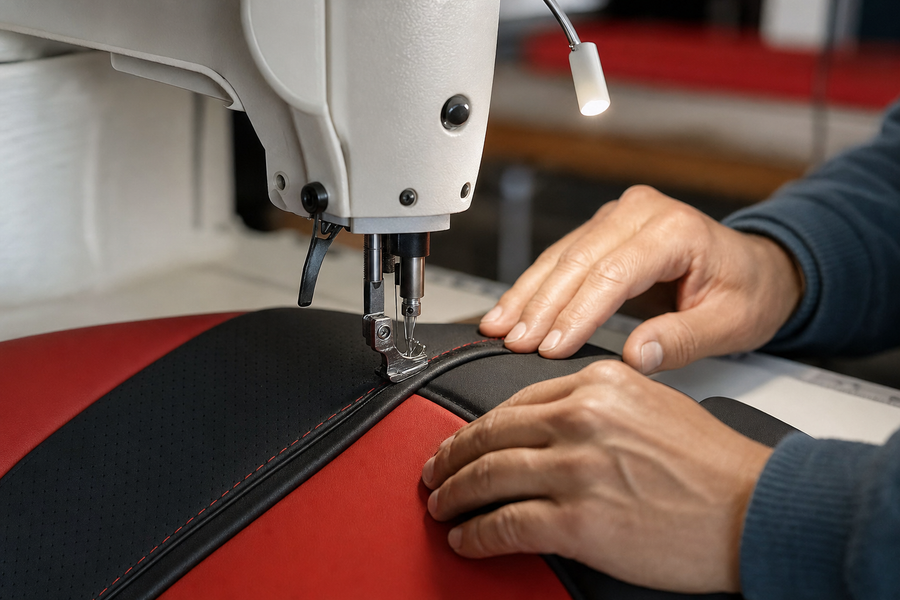
Coverking maintains one of the largest custom seat-pattern libraries in the industry. Seats are digitally scanned in 3D, and engineers spend weeks refining each pattern around the real contours, headrests, armrests, consoles, and levers of a specific vehicle — including seat-mounted airbags and full seat function. Every set is then cut and sewn to order for your exact year, make, model, and trim. That is why these covers look upholstered rather than slipcovered.
Layered for comfort and protection
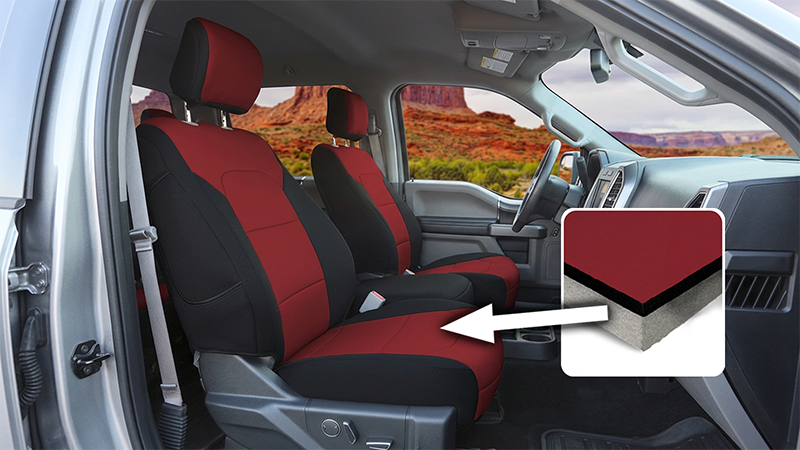
- Face fabric — genuine CR-grade neoprene with additional UV treatment, so color stands up to sun exposure.
- Core — a half-inch of dense laminated foam that adds comfort and rounds off wear points.
- Backing — a non-slip layer that keeps covers planted as you get in and out.
Seams are finished with name-brand zippers and hook-and-loop, and covers extend to headrests, armrests, and consoles where the vehicle has them.
Installation and care
Every set ships with Coverking's free installation kit — a tuck tool, two anchor traction pads, a Kevlar glove, and safety glasses — and installs with no special tools. For care, wipe with a damp cloth and mild soap; because neoprene keeps spills on the surface, most messes never become stains.
Who makes these
Coverking has engineered custom vehicle covers since 1986 and has supplied original-equipment manufacturers for 38 years. Design, engineering, patterning, and support are based at the 100,000-square-foot Anaheim, California headquarters, and facilities are IATF 16949 and ISO 9001 certified — the same quality standards automakers require of their own suppliers. Every cover is made to order and backed by a 30-day return policy, a manufacturer warranty, and U.S.-based support.